

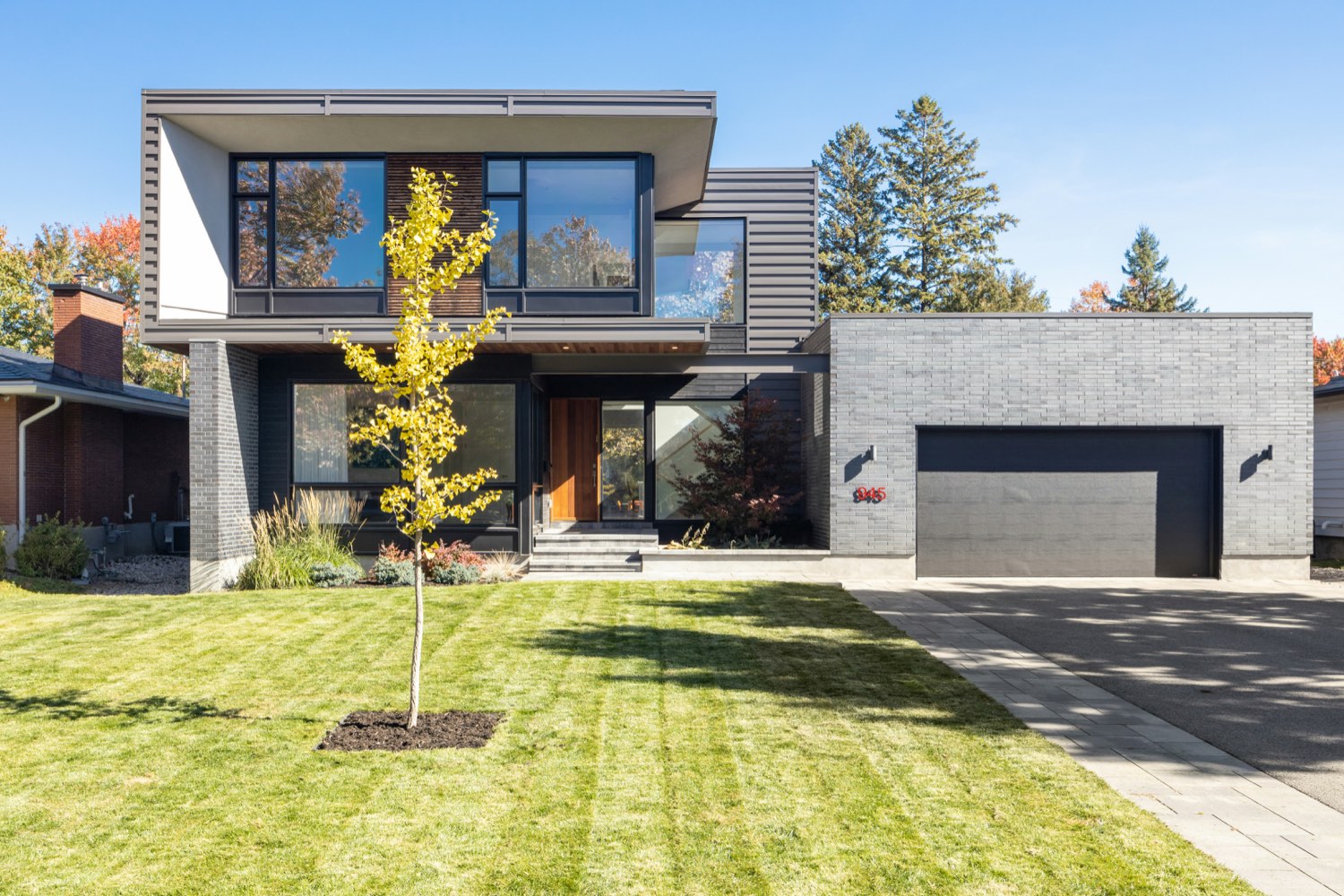
Winter has a reputation in real estate: fewer listings, quieter weekends, and a long wait until spring. In Oakville’s upper end, that reputation is only half right. Typical detached values have held, and in some measures are slightly above last year. At the same time, there is still a deep selection of homes, buyers are taking longer to decide, and the average Oakville sale closed below asking. That is not a “fire sale.” It is a market in which a prepared buyer can take a proper look — without the frenzy that used to compress every decision into a weekend.
This article is a buyer’s reading of public data from the Toronto Regional Real Estate Board (TRREB), the Oakville, Milton and District Real Estate Board (OMDREB), and the Bank of Canada. It complements, rather than repeats, our seller-focused winter guide. Individual streets and homes will always differ from a municipal average.
Detached Oakville has held its price. Buyers still have room.
TRREB’s MLS® Home Price Index is the cleanest way to talk about value, because it tracks a typical home instead of whatever mix sold in a given month. In October 2026, Oakville’s Composite benchmark was $1,148,800, down only 0.29 per cent from a year earlier. The detached benchmark was $1,624,600, up 0.56 per cent. Attached single-family homes were $1,027,000, up 0.35 per cent. Those are not boom-year gains. They are evidence that well-located Oakville houses have been more resilient than the GTA overall, where the Composite benchmark fell 4.28 per cent to $916,400 and the detached benchmark fell 4.44 per cent to $1,194,200.
The transaction data tell the other half of the story. TRREB recorded 191 Oakville sales in October, at a median of $1,220,000, with 531 new listings and 1,025 active listings at month end. On average, Oakville homes sold for 95 per cent of asking after 37 listing days — slower and softer than the GTA’s 97 per cent and 31 listing days, and softer than Burlington’s 97 per cent and 32 days.
Narrow the lens to detached houses, where most of Oakville’s luxury conversation belongs, and the same pattern holds. TRREB counted 106 detached Oakville sales in October, at an average of $1,833,285 and a median of $1,580,500. Sellers brought 296 new detached listings to market, and 568 detached homes were still active at month end. Those homes also sold for 95 per cent of asking, after 37 listing days, compared with 97 per cent and 29 days for GTA detached sales overall. The practical point is simple: Oakville’s detached market has not given up its value, and it has not returned to a multiple-offer default.
Why winter can favour a prepared buyer
Seasonality still matters. New listings typically thin out as the holidays approach, and some owners prefer to wait until March or April. That can shrink the menu. It can also improve the quality of the conversation. In October, even before the quietest weeks of the year, Oakville already had 531 new listings against 191 sales — nearly three new listings for every sale — and 1,025 homes on the market at month end. TRREB’s 12-month inventory trend for Oakville stood at 4.9 months, with a 36.3 per cent sales-to-new-listings trend — both looser than Burlington (3.6 months and 46.7 per cent) and looser than Halton as a whole (4.2 months and 40.5 per cent). When activity slows further in December, the buyers who remain are often more serious, and the sellers who remain are often more willing to discuss price, closing dates and conditions. A winter showing is also easier to judge: you can walk a property in bare trees and lower light, take a second visit, and read an inspection properly.
Financing belongs in the same picture. On 28 October 2026, the Bank of Canada raised its overnight rate target by 25 basis points to 2.5 per cent, and said housing is expected to remain relatively weak. It also said there could be a need to raise the policy rate further, but that it will proceed carefully; the next scheduled announcement is 9 December 2026. TRREB’s October Market Watch, citing the Bank of Canada, listed a 5-year mortgage rate of 6.19 per cent for the month, with prime at 4.5 per cent. The useful winter discipline is a current pre-approval and a purchase price you can carry if rates do not fall.
Condos and townhomes are a different Oakville
It would be a mistake to copy a detached-home strategy onto a condo apartment. Oakville’s apartment benchmark was $537,300 in October, down 7.72 per cent year over year. Condo townhouses were $703,400, down 4.50 per cent — a larger adjustment than on the detached side, and consistent with the GTA, where apartment and townhouse benchmarks were down 7.33 per cent and 6.64 per cent. OMDREB’s 5 November report, using the local board’s own averages, also described a softer Oakville townhouse and condominium segment: an average of $804,928, down 4.0 per cent from October 2025, with sales up 20.0 per cent from September.
How to shop well between now and spring
Start with the property, not the calendar. Browse current Oakville listings, including exclusive listings, and be precise about the lot, the location and the renovation you are actually willing to take on. Use the data as a negotiating range, not a script: a 95 per cent sale-to-list average does not mean every Oakville house should be offered at 5 per cent below the list price. Leave time for due diligence, and do not limit yourself to the open market. In a town where new listings have been trending lower — OMDREB reported that Oakville detached new listings declined 24.3 per cent from September — some of the homes that will fit you best will be shared quietly first.
If you would like to view a specific property, book a private showing. If you would rather have homes brought to you, including exclusive and off-market opportunities, get in touch to join Bayshire’s Buyer Property Match, or consider our off-market VIP list. If your next purchase depends on selling the home you already own, we would be pleased to provide a complimentary, confidential valuation, with no obligation.
— Leanne Binsell, Founder & Broker, Bayshire Team
Sources
All figures were checked against the public sources below on 10 November 2026. Average and median sale prices reflect the mix of homes that sold in the month and can shift when that mix changes; the MLS® HPI benchmark is the better measure of typical-home price trends. TRREB months-of-inventory and sales-to-new-listings figures cited as “trend” are the board’s 12-month trend measures. This article is general information only. It is not mortgage, tax or legal advice, and it does not predict the price or selling time of any property.
- Toronto Regional Real Estate Board, Market Watch, October 2026 (released 4 November 2026): https://trreb.ca/market-data/market-watch/ and https://trreb.ca/wp-content/files/market-stats/market-watch/mw2610.pdf
- Toronto Regional Real Estate Board, MLS® Home Price Index public tables, October 2026: https://trreb.ca/wp-content/files/market-stats/home-price-index/TRREB_MLS_HPI_Public_Tables_1026.pdf
- Oakville, Milton and District Real Estate Board, “October 2026 Market Report: October Homes Sales Increase Across Halton,” 5 November 2026: https://omdreb.ca/blog/october-2026-market-report-october-homes-sales-increase-across-halton/
- Bank of Canada, “Bank of Canada raises the policy rate by 25 basis points to 2½%,” 28 October 2026: https://www.bankofcanada.ca/2026/10/fad-press-release-2026-10-28/
- Bank of Canada, Monetary Policy Report, October 2026: https://www.bankofcanada.ca/publications/mpr/mpr-2026-10-28/
Statistics are the property of the boards and associations that published them and are reproduced here for commentary. MLS® and the MLS® logo are registered trademarks of the Canadian Real Estate Association.
